
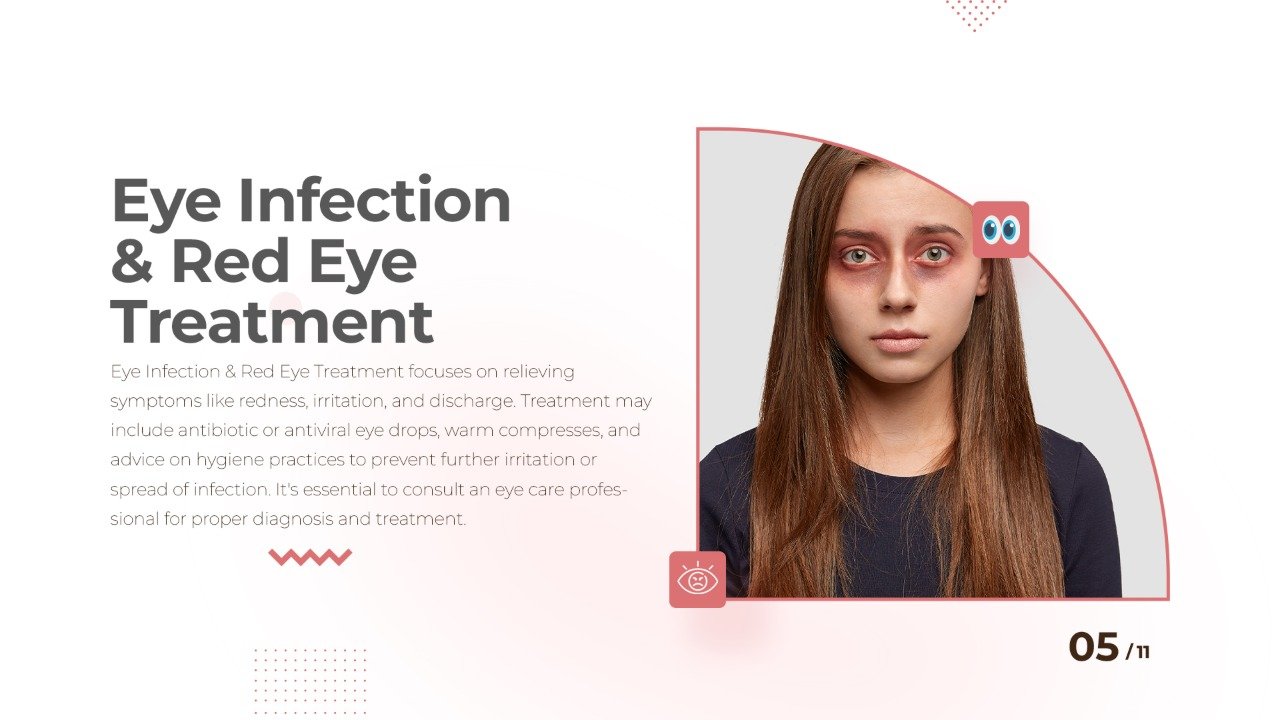

Red Eye — A Common Symptom with Many Causes
A red or pink eye is one of the most frequent reasons patients visit an ophthalmologist. While the symptom appears straightforward, the underlying causes are numerous and clinically very different — ranging from mild allergic reactions and common viral infections to bacterial corneal infections and, in some cases, more serious conditions such as iritis (inflammation inside the eye) or acute angle-closure glaucoma. Determining the precise cause is critical, because each condition requires a different treatment, and some can lead to lasting vision damage if incorrectly managed.
At our clinic in Malad, Dr. Archana Sanghvi Gotecha evaluates red eye presentations thoroughly using a detailed clinical history and slit-lamp biomicroscopy, to arrive at an accurate diagnosis and provide targeted, effective treatment.
Common Types of Eye Infections
- Bacterial conjunctivitis — characterised by purulent (thick) discharge, redness, and crusting of the eyelids, particularly in the morning
- Viral conjunctivitis — highly contagious, typically associated with watery discharge, swollen lymph nodes, and recent upper respiratory infection
- Allergic conjunctivitis — triggered by dust, pollen, pet dander, or environmental allergens; associated with itching, redness, and bilateral eye involvement
- Corneal infections (keratitis) — potentially serious, causing significant pain, photophobia, and vision disturbance, requiring prompt and targeted treatment
When Is Red Eye a Medical Urgency?
Most cases of red eye are not emergencies. However, certain features require urgent evaluation. Severe eye pain, a sudden change in vision, corneal cloudiness or white spot on the cornea, significant photophobia (sensitivity to light), or red eye following an eye injury should prompt an immediate consultation. These signs may indicate conditions that require urgent intervention to prevent permanent vision loss.
Treatment of Eye Infections
Treatment is determined by the cause. Bacterial conjunctivitis is managed with appropriate antibiotic eye drops. Viral conjunctivitis is largely managed supportively — with lubricating drops, cold compresses, and strict hygiene guidance to prevent transmission. Allergic conjunctivitis is treated with antihistamine or mast-cell stabilising drops and allergen avoidance advice. Corneal infections require close clinical monitoring and targeted antimicrobial therapy, with urgent referral if vision is at risk.
Eye Infections in Mumbai — Seasonal and Environmental Triggers
Mumbai’s monsoon season sees a notable seasonal rise in viral conjunctivitis cases, partly linked to environmental contamination and close contact during public transport. Year-round, dust and air pollution remain triggers for allergic and irritant eye conditions. Prompt consultation rather than self-medication is always the safer approach — incorrect use of antibiotic or steroid drops without a proper diagnosis can worsen certain conditions significantly.
Frequently Asked Questions
A: It is not advisable to self-prescribe antibiotic eye drops for red eye. Many causes of red eye — including viral conjunctivitis and allergic conjunctivitis — do not respond to antibiotics. Inappropriate antibiotic use can contribute to resistance, delay correct treatment, and in some cases worsen certain conditions. A proper examination is essential before starting any treatment.
A: Viral conjunctivitis typically resolves on its own within one to two weeks. During this period it is highly contagious. Patients are advised to avoid touching their eyes, wash hands frequently, avoid sharing towels or pillowcases, and refrain from wearing contact lenses until the infection has fully resolved.
