

What Is Computer Vision Syndrome?
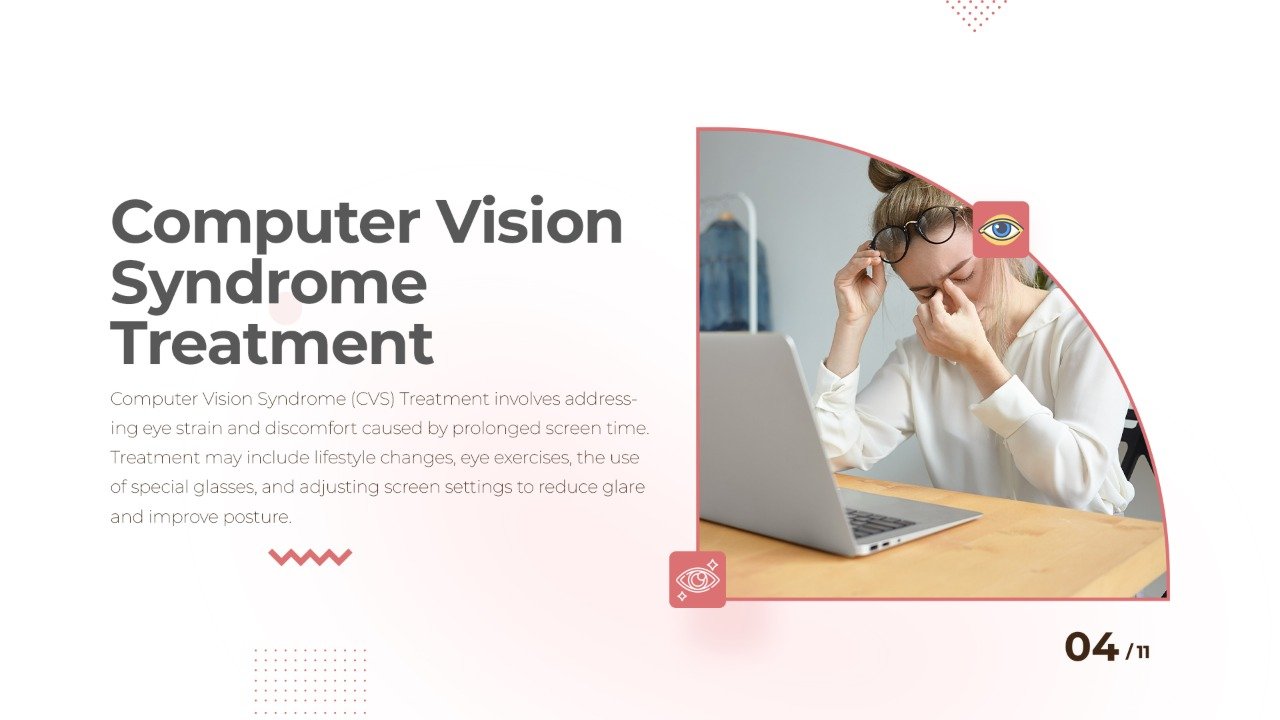
Computer Vision Syndrome (CVS) — also referred to as digital eye strain — is a cluster of vision and eye-related problems arising from prolonged use of digital devices, including computers, smartphones, tablets, and televisions. It is not a single condition but a range of symptoms experienced by people who spend extended hours in front of screens. In a technology-driven city like Mumbai, CVS has become one of the most commonly encountered reasons adults visit an ophthalmologist.
The good news is that CVS is manageable. With an accurate clinical assessment, appropriate optical correction, and targeted lifestyle guidance, the majority of patients experience significant improvement in their symptoms.
Computer Vision Syndrome — Signs and Symptoms
Symptoms of CVS can vary in type and severity. Common signs and symptoms include:
- Eye strain and fatigue — a feeling of heaviness, soreness, or tiredness in or around the eyes
- Headaches — typically frontal or temporal, occurring during or after prolonged screen use
- Blurred or fluctuating vision — particularly when shifting focus between the screen and other distances
- Dry or irritated eyes — due to reduced blink rate and increased tear evaporation during screen use
- Neck, shoulder, or upper back discomfort — related to poor screen height, angle, or seating ergonomics
Why Does Prolonged Screen Use Cause These Symptoms?
Several factors contribute to CVS. The human blink rate drops by approximately 50% during screen use, leading to faster tear evaporation and the development of dry eye symptoms. Uncorrected or outdated refractive errors — even subtle ones — force the focusing muscles of the eye to work harder to maintain clarity, causing strain and fatigue. Poor lighting, screen glare, incorrect viewing distance, and non-ergonomic workstation setup all amplify the problem.
Many professionals in Malad and across Mumbai routinely spend eight to twelve hours in front of digital screens. This sustained exposure, combined with air-conditioned indoor environments that worsen dry eye and often sub-optimal lighting, has made CVS a significant and growing occupational eye health concern. Early intervention through a comprehensive eye assessment and ergonomic guidance can meaningfully reduce symptoms and prevent longer-term ocular surface problems.
CVS in Mumbai's Working Population
Treatment and Management of Computer Vision Syndrome
Management of CVS begins with ensuring the patient has an accurate, up-to-date prescription — often the single most impactful intervention. Dr. Gotecha assesses each patient’s visual needs specifically for screen use, which may differ from their standard distance or reading prescription. Other key elements of management include:
- Treatment of co-existing dry eye disease with appropriate lubricating drops
- Patient education on the 20-20-20 rule: every 20 minutes, look at an object 20 feet away for 20 seconds
- Workstation ergonomics advice: screen height, distance, and tilt
- Lighting guidance to minimise glare and reduce visual contrast demands
Frequently Asked Questions
A: Blue light-blocking glasses may help some individuals with evening screen use and associated sleep disruption. However, the clinical evidence for their effectiveness in directly reducing CVS symptoms such as eye strain and headaches is limited. An accurate screen-use prescription, proper ergonomics, and dry eye management are typically more impactful. Dr. Gotecha provides individualised recommendations based on a thorough assessment of each patient’s visual needs.
A: Yes. With online learning and recreational screen use increasing among children, CVS is no longer confined to adults. Children who spend extended time on screens may experience eye strain, headaches, and blurred vision. Encouraging regular breaks, limiting recreational screen time, ensuring good posture, and scheduling annual eye examinations are all important steps in protecting a child’s visual health.
